
★ Overview
LEPRECHAUN
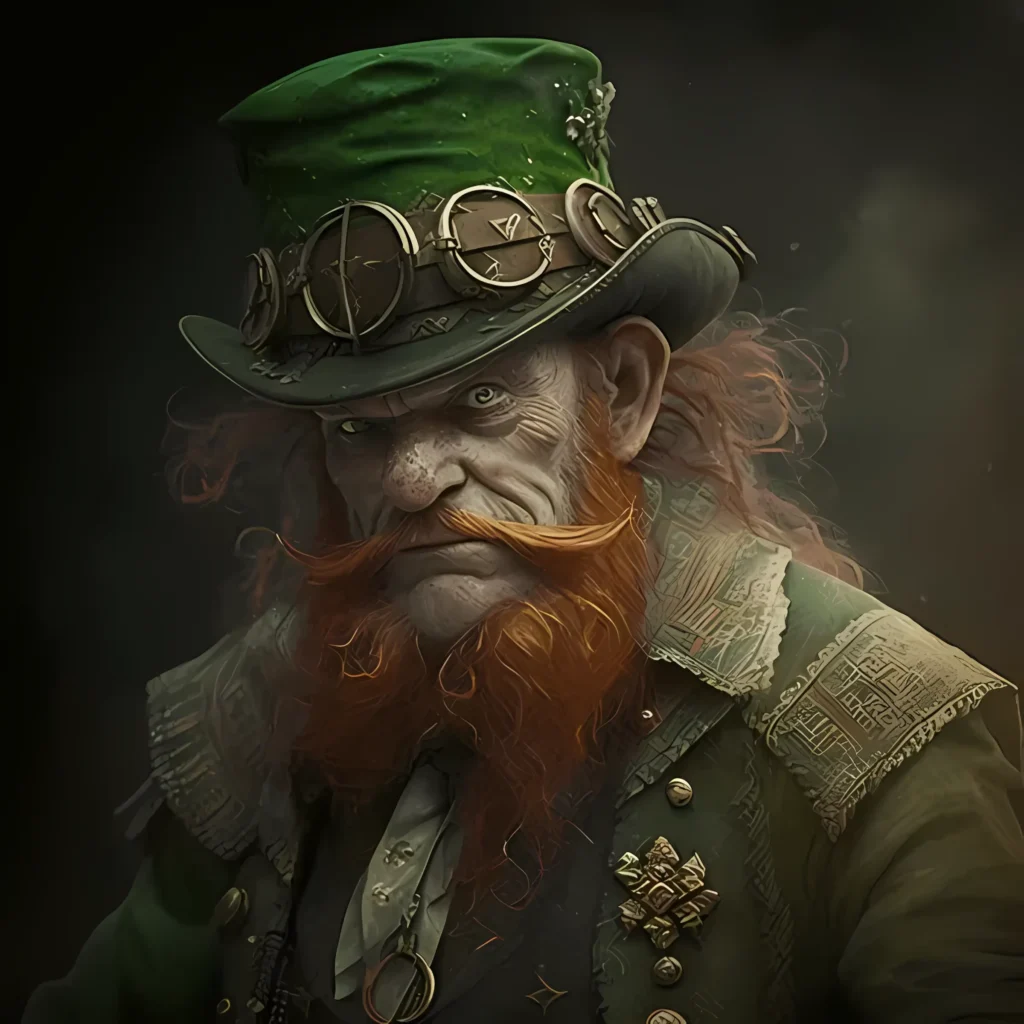
In the emerald hills of Ireland, the Leprechaun (Old Irish: luchorpán, “small body”) is a far cry from the cereal-box mascot of modern pop culture. Historically, they are a class of “solitary fairies” (Aos Sí) known not for their friendliness, but for their extreme grumpiness and incredible skill in craftsmanship. They are the shoemakers of the fairy world, constantly hammering away at a single left shoe. Legend says they are the sons of “evil spirits” and “degenerate fairies,” making them suspicious, greedy, and intensely private guardians of ancient, hidden treasures left behind by the wars of the Tuatha Dé Danann.
He is the personification of “easy money” that is never actually easy to get. Catching a Leprechaun is a feat of mental gymnastics; he doesn’t use magic to fight you, he uses your own greed and distraction against you. He is a master of the “Irish exit” and verbal trickery. If you take your eyes off him for even a second, he vanishes, taking your dreams of gold with him. He is a reminder that while the fairies have much to give, they rarely give it for free.
Origin & History
The origins of the leprechaun can be traced back to ancient Irish folklore and mythology. The word "leprechaun" is believed to have originated from the Irish Gaelic word "leipreachán," which means "a small-bodied fellow."In Irish folklore, leprechauns were often associated with shoemaking, and were said to be skilled at crafting and repairing shoes. They were also known for their love of gold, and it was said that they kept a pot of gold hidden at the end of a rainbow.Over time, leprechauns became an important part of Irish mythology, and they came to be associated with luck and good fortune. Today, they are often seen as symbols of Irish culture and are celebrated around the world on St. Patrick's Day.
Powers & Abilities
- Illusory Wealth: He can make a handful of dead leaves look like gold coins to a greedy human, only for the "gold" to revert to trash once he is safely away.
- Teleportation/Vanishing: He doesn't fly; he simply "ceases to be" the moment a human blinks or looks away.
- Wish-Granting (under duress): If captured, he is bound by fairy law to offer three wishes or his pot of gold in exchange for his freedom.
- Auditory Triggers: He can project the sound of his cobbling hammer to lead travelers deep into the woods or away from his treasure.
Appearance
- The Stature: He is small, typically standing about two to three feet tall, though in some older tales, he is described as being small enough to sit on a large mushroom.
- The Face: He has a withered, red-faced, and wrinkled appearance, often likened to a "shriveled apple." He almost always sports a beard (usually gray or red).
- The Traditional Garb: Forget the all-green suit; originally, he was most often seen in a square-cut red coat with metal buttons, buckled shoes, and a cocked (three-cornered) hat.
- The Cobbler’s Apron: He is frequently found wearing a leather apron, stained with the wax and polish of his trade.
- The Smoking Habit: He is almost never seen without his dúidín (a short clay pipe), which adds to his perpetual air of annoyance at being interrupted.
- The Silver and Gold Coins: He carries two leather pouches: one containing a silver shilling that magically returns to his purse after being spent, and one containing a gold coin to bribe his way out of capture.