
★ Overview
DRAGON (European)
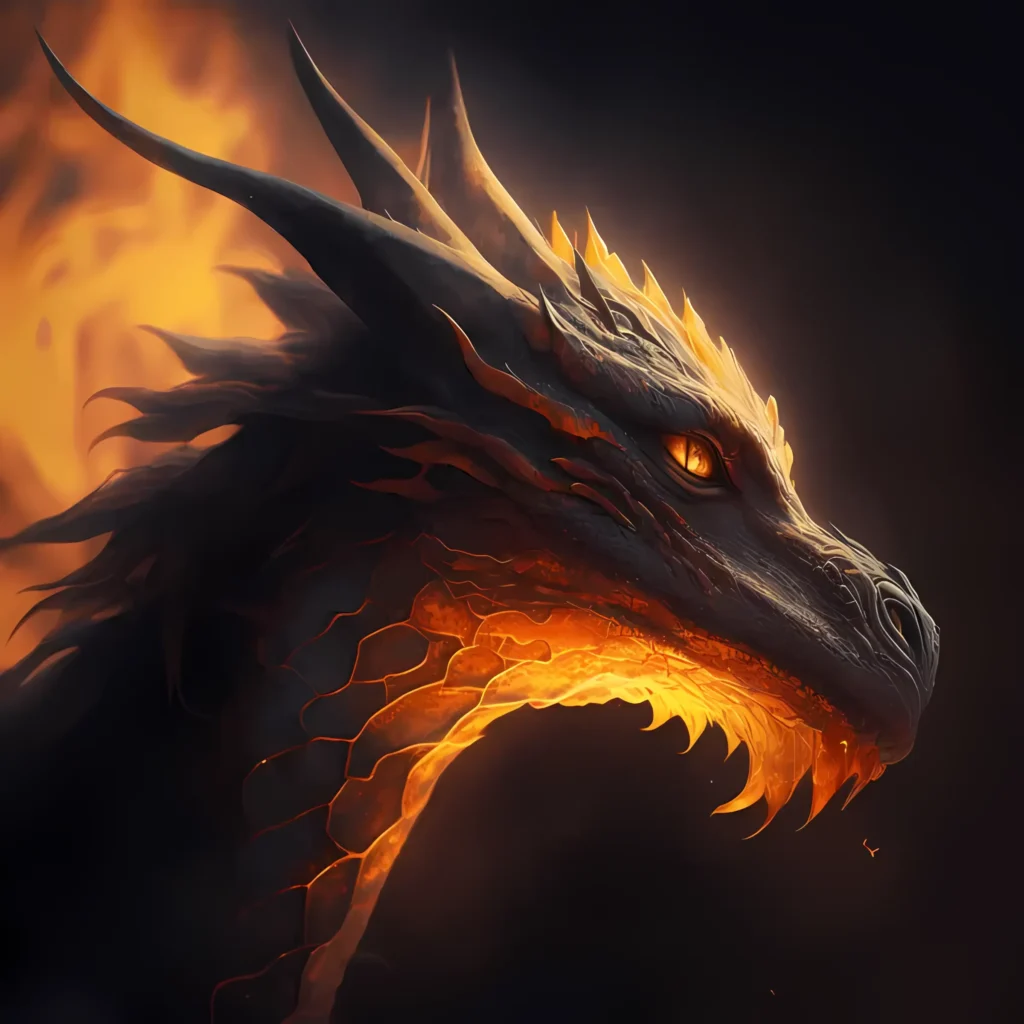
The European dragon is a legendary creature that appears in the folklore and mythology of many European cultures. It is typically depicted as a large, scaly reptile with wings, sharp claws, and a long tail, and is often associated with fire, destruction, and chaos.
In many stories, the European dragon is portrayed as a fierce and malevolent beast that terrorizes villages and hoards treasure. It may breathe fire or poison, and is often said to be immune to weapons and magic.
However, in some stories, the European dragon is portrayed as a more complex and nuanced creature, capable of wisdom and compassion.
The European dragon has been a popular subject in literature, art, and popular culture for centuries, and has inspired countless works of fiction, from J.R.R. Tolkien’s “The Hobbit” to the popular “Game of Thrones” series.
Origin & History
The origin of the European dragon is uncertain and complex, as it is a creature that has been a part of the folklore and mythology of many different cultures throughout history.
One possible origin of the European dragon can be from Greek mythology, where the monster Typhon was often depicted as a fire-breathing dragon-like creature with many heads and wings.
In medieval Europe, the dragon became a popular subject in legends and folklore, with many stories featuring knights and dragons, such as the story of St. George and the Dragon. In these stories, dragons were often depicted as hoarding treasure and causing destruction, and were seen as symbols of evil and chaos.
The European dragon has continued to be a popular subject in literature, art, and popular culture to this day, and has been adapted and reinterpreted in countless ways across different media and cultural contexts. Its exact origin may be difficult to trace, but its enduring popularity is a testament to its status as one of the most iconic and enduring creatures of myth and legend.
Powers & Abilities
- Elemental Breath: While the Western "fire-breath" is iconic, dragons across myth also breathe poison mist, ice, lightning, and even "clouds" that produce rain.
- Flight: Western dragons use their wings
- Ancient Wisdom: Most dragons are portrayed as highly intelligent, often speaking human languages and possessing knowledge of ancient history or magic.
- Invulnerability: Their scales are typically harder than any forged steel, acting as natural plate armor that is nearly impossible to pierce with conventional weapons.
Appearance
- The Western Dragon: A heavy, reptilian beast with a dinosaur-like body, four powerful legs, and massive leathery, bat-like wings. They are covered in impenetrable scales and often have spade-tipped tails and horns.
- The Colors: Western dragons are often red (fire), green (forests/poison), or black (shadow/death).
- The Wyvern vs. Dragon: In European heraldry, a "true" dragon has four legs, while a Wyvern has only two legs and uses its wings as front limbs (similar to a bat or a bird).