
★ Overview
SATYR
The Satyr (Satyros) is the ultimate personification of unbridled life force, mischief, and hedonism. They are the constant companions of Dionysus, the god of wine and ecstasy, and they embody the “animal” side of human nature—the part that seeks pleasure, music, and chaos without the burden of social rules. Unlike the Centaur, who struggles with their dual nature, the Satyr fully embraces it. They are not warriors or scholars; they are the musicians of the wild, the dancers of the grove, and the eternal pranksters of the Greek landscape.
Their role in myth is to disrupt order and invite indulgence. Whether they are dancing to the pipes of Pan or chasing nymphs through the thickets, they live entirely in the moment. They are the personification of libido and impulse, reminding mortals that beneath every city-dweller lies a primal heart that beats for music, wine, and the freedom of the forest.
They are creatures of the “in-between,” existing where the civilized city ends and the untamed forest begins. In early Greek art, they were often depicted as more bestial and subversive, but as time passed (especially in Roman culture as “Fauns“), they became softer, more whimsical symbols of nature’s fertility. To encounter a Satyr was to risk being swept up in a “Satyric Drama”—a whirlwind of wine, dance, and trickery that could leave a mortal either enlightened or utterly exhausted.
Origin & History
Satyrs are often described as the children of the five daughters of Hecaterus or as the offspring of Hermes and Iphthime.
The Dionysian Entourage: They form the core of the Thiasus, the ecstatic retinue of Dionysus. Along with Maenads, they traveled across the ancient world spreading the cult of the vine and the joy of divine madness.
Silenus the Elder: The oldest and wisest of the Satyrs was Silenus, who was the tutor of Dionysus. While often depicted as a drunkard riding a donkey, he was possessed of great wisdom and the gift of prophecy when captured.
The Marsyas Rivalry: One of the most famous stories involves the Satyr Marsyas, an expert flute player who challenged Apollo to a musical contest. His defeat and subsequent punishment (flayed alive) serve as a grim warning about the consequences of mortal hubris.
Powers & Abilities
- Uninhibited Nature: Satyrs embrace their primal instincts and desires without reservation. Their uninhibited behavior often includes indulging in hedonistic pleasures, pursuing romantic escapades, and embracing the spontaneous joys of life.
- Dionysian Revelry: As companions of Dionysus, satyrs play an integral role in the god's celebrations and rituals. They participate in Dionysian festivals, dancing, playing music, and engaging in joyful revelry that embodies the spirit of the god they serve.
- Enchanting Music: They are masters of the pan flute and the lyre. Their music can induce an uncontrollable urge to dance, sleep, or fall into a trance-like state of "Divine Madness."
- Supernatural Agility: Thanks to their cloven hooves, they are some of the fastest climbers in the mythic world, able to scale vertical cliffs that would baffle a human.
- Resistance to Intoxication: Unlike the Centaurs, who turn violent when drunk, Satyrs gain energy from wine. It fuels their magic and allows them to dance for days without tiring.
- Animal Communication: They share a deep bond with the creatures of the forest, often using birds or squirrels as "scouts" to alert them to approaching humans.
Appearance
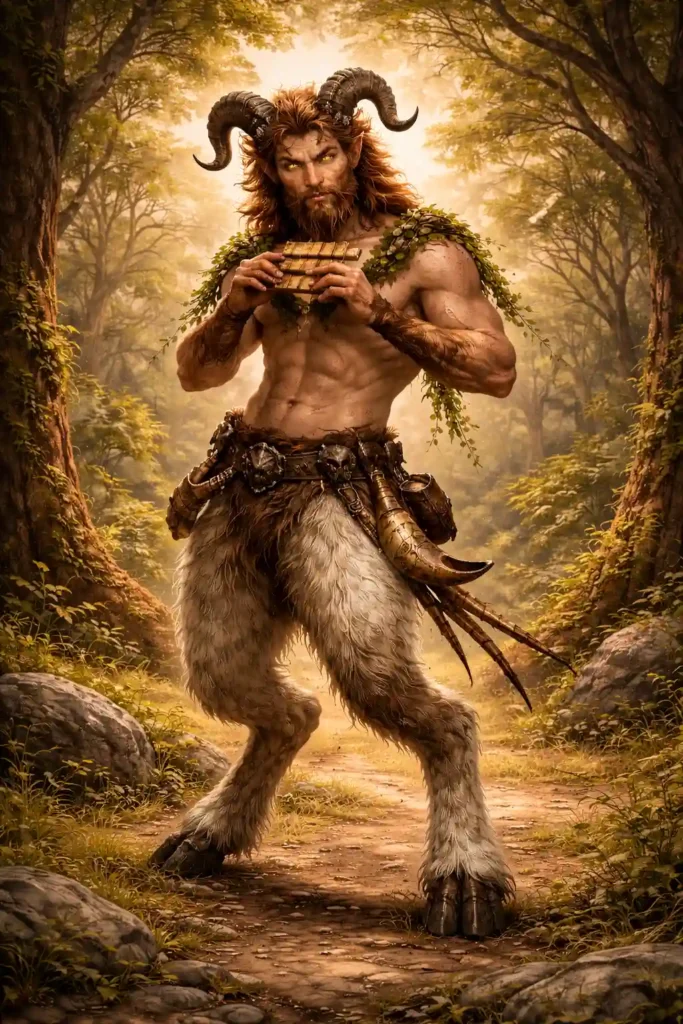
- Half-Human, Half-Goat Form: The most distinctive feature of satyrs is their hybrid appearance. From the waist up, they resemble humans, possessing torsos, arms, and heads similar to those of men. However, their lower bodies transform into the form of goats, complete with shaggy fur, hooves, and a tail.
- Small Horns: Many satyrs are depicted with small, curving horns that sprout from their foreheads. These horns symbolize their connection to nature and the untamed wilderness. Each horn is unique, reflecting the individuality of the satyr.
- The Tail: A short, tufted tail (either horse-like or goat-like) sits at the base of their spine, often twitching in time with the music they play.
- The Tools: They are rarely seen without a Syrinx (pan flute) or a Thyrsus (a pine-cone tipped staff). They often carry wineskins made of animal hide, usually half-empty.