
★ Overview
WENDIGO
Deep within the subarctic forests of the Great Lakes region and Canada, the Wendigo (or Windigo) haunts the physical and spiritual borders of Algonquian folklore. It is a creature of excess, isolation, and the terrifying necessity of survival. Born from the dark heart of a brutal winter, the Wendigo is not just a monster; it is a transformative curse. Legend tells that a human becomes a Wendigo by committing the ultimate taboo: cannibalism. Once the first bite is taken, the soul is consumed by an ancient, malevolent spirit, and the body begins to warp into a skeletal, towering manifestation of starvation.
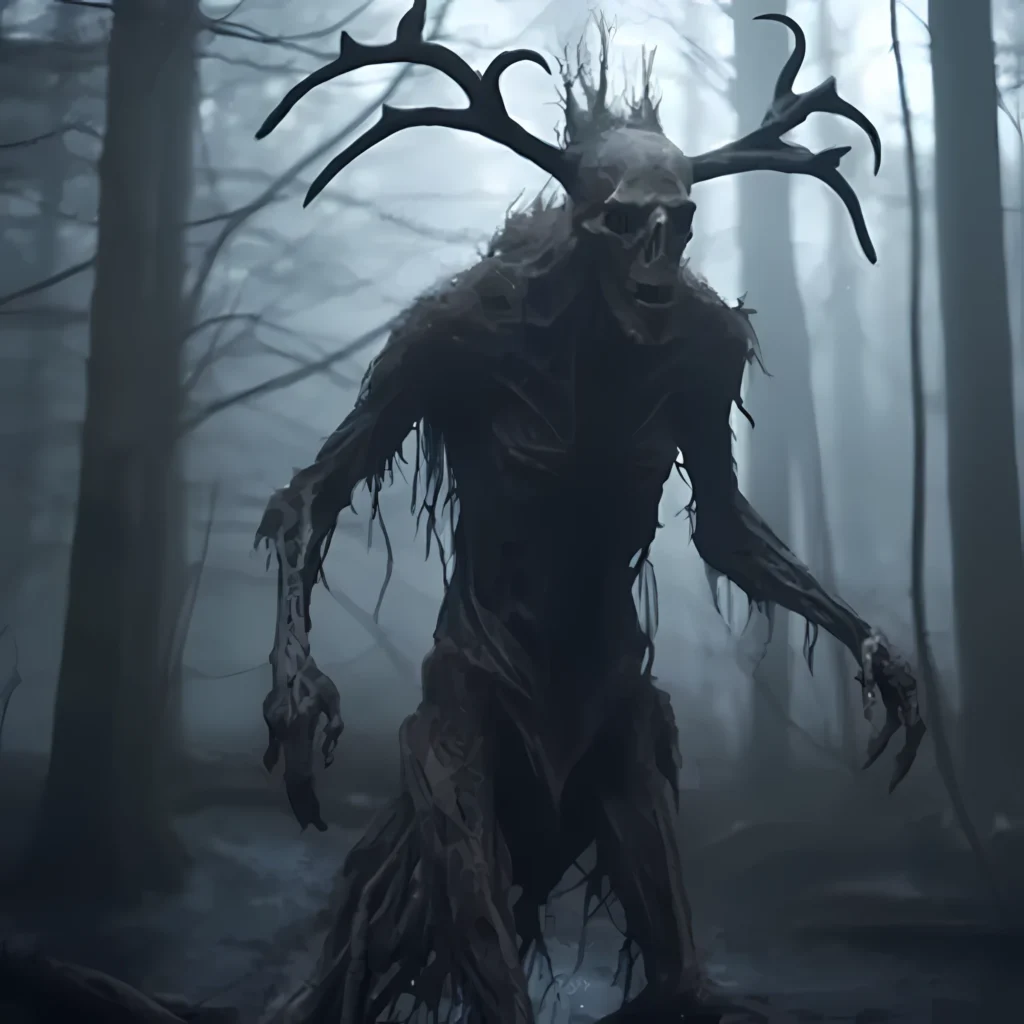
The Wendigo is a paradox of growth and hunger. It is said that every time it devours a person, it grows in size relative to the meal it just ate; therefore, it can never be full. Its physical appearance reflects this eternal misery: its skin is pulled taut over its bones like grey parchment, its eyes are pushed deep into their sockets, and it gives off the sickly sweet scent of decay. In many modern interpretations, it is depicted with the head of a stag and blackened antlers, but the traditional Cree and Ojibwe descriptions are even more haunting—a gaunt, lipless humanoid with feet so bloodied and frozen they have been worn away.
Origin & History
The legend of the Wendigo originates from the Algonquian-speaking tribes of North America, particularly among the Ojibwe, Cree, and other First Nations peoples. It is rooted in cultural beliefs about the harshness of winters and the extremities of famine. The Wendigo is born from desperation and the darkness that can take hold when survival becomes a brutal struggle.
The Transformation: Most legends suggest that a human becomes a Wendigo by consuming human flesh, particularly during a famine. Once the taboo is broken, a spirit of the woods possesses the person, warping their body and mind.
Wendigo Psychosis: Historically, the term was used to describe a culture-bound syndrome where an individual would develop an intense craving for human flesh and a fear of becoming a monster.
The Heart of Ice: Many traditions believe that at the center of a Wendigo is a heart made of solid ice. To truly kill the creature, this ice must be shattered or melted.
Powers & Abilities
- Voice Mimicry: It can perfectly imitate human voices, often crying out for help to lure hunters away from their camps and into the deep brush.
- Weather Manipulation: It is a master of the blizzard, able to summon sudden drops in temperature and blinding snow to disorient its prey.
- Wendigo Psychosis: It can infect the minds of humans, causing "Wendigo Fever"—an overwhelming, irrational craving for human flesh that leads to the creature's own creation.
- Supernatural Stealth: Despite its massive size, it moves with the silence of a falling snowflake, often standing perfectly still among the trees until it is too late.
Appearance
- The Frame: A towering, skeletal humanoid, often reaching 15 feet in height. Its limbs are unnaturally long, and its skin is pulled so tight over its bones that it looks like grey, ash-covered parchment.
- The Face: It is often depicted as lipless, with its own teeth having been gnawed away or replaced by jagged, yellowed fangs. Its eyes are pushed deep into their sockets, glowing with a faint, predatory light.
- The Decay: It gives off a sickly-sweet scent of decomposition. In some traditions, its feet are bloodied and charred from running so fast and so far that they have been worn down to stumps.
- The Modern Antlered Variant: While traditional folklore describes a gaunt human-beast, modern pop culture often adds the skull of a stag with blackened, rotting antlers, symbolizing its connection to the dark wilderness.