
★ Overview
SPHINX
Unlike the later Greek version—a winged, female monster who strangled travelers with riddles—the Egyptian Sphinx is almost exclusively male, benevolent, and silent. It does not hunt; it watches.
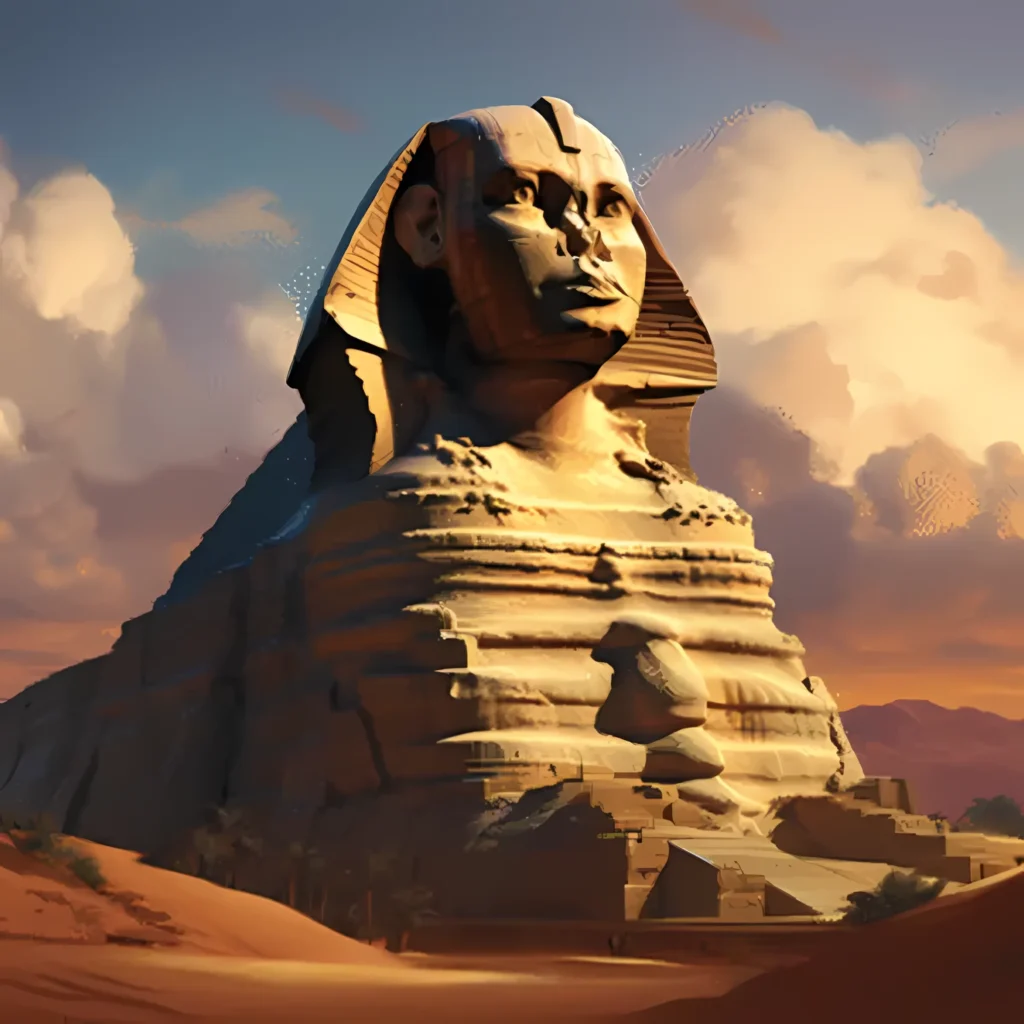
Perched on the edge of the Giza plateau, the Sphinx serves as the “Threshold Guardian,” stationed at the boundary between the world of the living and the Duat (the underworld). It faces the rising sun, absorbing the first rays of dawn to recharge its spiritual potency and maintain Ma’at (divine order) over the necropolis. The Sphinx is a symbol of , proving that the Pharaoh possesses the wisdom of a man and the unstoppable strength of a lion.
Origin & History
Ancient tales intertwine the origins of the Sphinx with the grand tapestry of Egyptian mythology. Born in the shadow of the Giza plateau, it was said that the Sphinx was a guardian of sacred tombs and treasures. According to some accounts, the creature was created as a celestial amalgamation of lion and human by the gods themselves, intended to safeguard the knowledge of the ages.
Powers & Abilities
- Solar Resonator: It acts as a conduit for the sun god Ra. By facing east, it anchors the sun’s energy to the earth, protecting the sacred tombs behind it.
- Dream Walking: The Sphinx can enter the dreams of mortals to deliver prophecies, test their character, or demand restoration of its physical form.
- Aura of Terror (Heryshef): While benevolent to the righteous, its presence radiates a supernatural dread that repels grave robbers and malevolent spirits.
- Flight and Agility: In certain depictions, the Sphinx has wings, which could grant it the ability to fly or move swiftly.
Appearance
- Body: The head of a Pharaoh (wearing the Nemes headdress) and the recumbent body of a Lion.