
★ Overview
YAKSHI
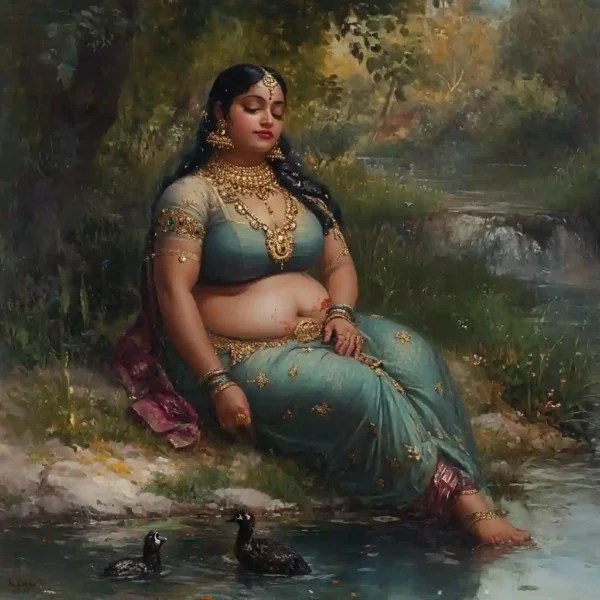
In Hindu mythology, a Yakshi (also spelled as Yakshini) is a type of female nature spirit, usually depicted as a benevolent or malevolent being depending on the context. Yakshis are often portrayed as beautiful, voluptuous women who inhabit forests, rivers, lakes, and other natural landscapes. They are considered guardians of the natural world and are associated with fertility, prosperity, and abundance.
However, in some stories, Yakshis can also be depicted as malevolent spirits who seduce and prey upon unsuspecting travelers. These darker depictions often highlight their supernatural abilities to manipulate and enchant humans for their own purposes.
Yakshis play significant roles in Hindu and Buddhist mythology, folklore, and art, where they are sometimes depicted as attendants or companions to deities or as independent entities. In her benevolent form, she is adorned with intricate jewelry and a serene expression; however, in her more fearsome folklore incarnations, she may have long, sharp fangs hidden behind her smile or feet that are turned backward to reveal her supernatural nature.
Origin & History
The origins of Yakshis trace back to ancient Indian mythology and cultural beliefs. The concept of Yakshis is deeply rooted in Hinduism and Buddhism, where they are considered as supernatural beings associated with the natural world.
The term "Yaksha" or "Yakshini" originates from ancient Sanskrit literature. Yakshas were originally male nature spirits, mentioned in ancient Indian texts such as the Vedas and the Mahabharata. They were believed to be the guardians of the natural world, residing in forests, mountains, and other wild places.
Over time, the concept of Yakshis emerged, representing female counterparts to Yakshas. Yakshis are often depicted as beautiful and seductive female spirits, embodying the feminine aspects of nature. They are associated with fertility, abundance, and prosperity, as well as with the protection of natural landscapes.
Yakshis gained prominence in Indian mythology, folklore, and art, particularly during the period of ancient Indian civilization, where they were depicted in sculptures, paintings, and literary works. Their depiction evolved over the centuries, influenced by regional beliefs, cultural practices, and artistic interpretations.
In addition to Hinduism, Yakshis also found a place in Buddhist mythology, where they were often depicted as female deities or attendants of Buddhist gods. In both Hinduism and Buddhism, Yakshis are often portrayed as powerful beings with the ability to either bestow blessings or cause harm, depending on their mood or intentions.
Powers & Abilities
- Shape-shifting: Yakshis are often believed to possess the ability to change their form at will, allowing them to appear in various guises.
- Enchantment: Yakshis are renowned for their ability to enchant and seduce humans with their beauty and charm.
- Fertility and Prosperity: Yakshis are associated with fertility, abundance, and prosperity. They are believed to have the power to bless humans with fertility, ensuring bountiful harvests, healthy offspring, and overall prosperity.
- Natural Magic: Yakshis are closely connected to the natural world and are believed to wield magical abilities related to nature.
- Guardianship: Yakshis are often regarded as guardians of specific natural landscapes, such as forests, rivers, and mountains.
- Curses and Blessings: Yakshis possess the ability to bestow both curses and blessings upon humans.
Appearance
- The Idealized Form: They are depicted as breathtakingly beautiful women with wide hips, slender waists, and heavy breasts, symbolizing their connection to fertility and the "nourishing" aspect of the earth.
- The "Tree-Hugging" Pose: Known as the Shalabhanjika, they are often shown standing with one leg wrapped around a tree trunk and one hand grasping a flowering branch above them.
- The Jewel-Laden Spirit: They wear intricate waistbands (mekhalas), heavy anklets that chime as they move, and elaborate floral ornaments in their hair.
- The Feline Grace: Their eyes are large and almond-shaped, reflecting an ancient, predatory intelligence.
- The Monstrous Reveal: In darker folk legends (particularly in South India), a Yakshi might hide sharp fangs or cloven hooves, revealing her true form only after her victim is trapped.
- Natural Elements: Yakshis are frequently depicted in association with natural elements such as trees, flowers, fruits, and animals. They may be shown standing amidst lush vegetation, sitting beside rivers or lakes, or surrounded by wildlife.
- Symbolic Attributes: In some depictions, Yakshis may be portrayed holding symbolic objects such as lotus flowers, which represent purity and enlightenment, or fruit and crops, symbolizing fertility and abundance.