
★ Overview
QILIN
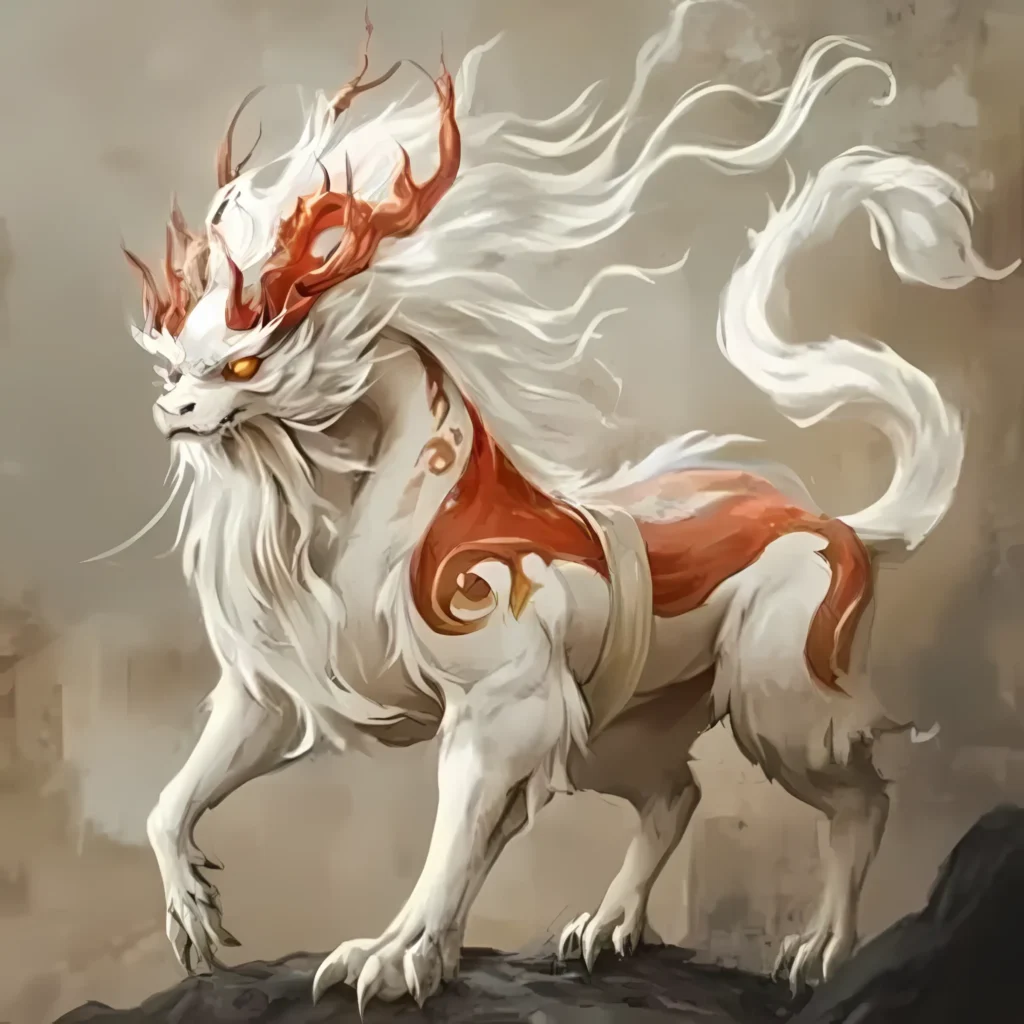
The Qilin (麒麟) is a mythical creature in Chinese mythology that symbolizes virtue, prosperity, and peace. Revered as a divine being, it is often associated with the arrival of great sages or benevolent rulers. Sometimes referred to as the “Chinese unicorn,” the Qilin is known for its gentle and noble nature, contrasting with its immense power. Its appearance is considered a harbinger of good fortune and a sign of cosmic harmony.
It is so gentle that it refuses to step on a single blade of grass or harm even the smallest insect, often depicted walking on clouds or water to avoid touching the earth. To see a Qilin is the ultimate sign of divine favor; it is a creature that sees the world not through the lens of survival, but through the lens of morality.
In Confucian tradition, the qilin is tied to sage-kings and moral order. According to legend, a qilin appeared before the birth of Confucius (551–479 BCE). Later stories claim a wounded qilin appeared shortly before his death, symbolizing the end of a moral age.
By the Han period, emperors sometimes claimed a qilin sighting to signal that Heaven approved of their rule. These “appearances” were often politically convenient.
Origin & History
One of the earliest references appears in the Classic of Poetry (Shijing, 11th–7th century BCE), where the qilin is already treated as a symbol of virtue and good governance.
Later, it’s described in the Classic of Mountains and Seas (Shan Hai Jing), a mythological geography compiled between the 4th–1st centuries BCE. There, the qilin is more overtly supernatural—associated with omens and cosmic balance.
By the time of the Han dynasty (206 BCE–220 CE), the qilin had become firmly established as an auspicious beast linked to imperial legitimacy.
In Chinese cosmology, the qilin is one of the “Four Auspicious Creatures,” alongside:
-
the Dragon
-
the Phoenix
-
the Tortoise
Together they symbolize harmony in the natural and moral universe. The qilin, specifically, embodies benevolence and righteousness.
Powers & Abilities
- Auspicious Sight: The Qilin can perceive a person’s soul. It brings prosperity to the virtuous and serves as a divine judge against the wicked.
- Elemental Mastery: It can breathe fire and manipulate the clouds, though it primarily uses these powers for protection rather than aggression.
- Prophetic Heraldry: Its appearance is a biological "forecast" for a golden age of peace or the arrival of a world-changing genius.
- Fertility Blessing: In folk tradition, the Qilin is believed to bring "noble sons" to families, often depicted carrying a baby on its back or coughing up a jade tablet to a pregnant mother.
Appearance
- The Chimerical Form: It possesses the body of a deer or ox, the hooves of a horse, and a tail like a lion or ox.
- The Dragon’s Head: Its head is unmistakably draconic, featuring a flowing beard, thick eyelashes, and a mane that always flows upward toward the heavens.
- The Scales: Its body is covered in shimmering, jewel-like scales (often gold, multi-colored, or sapphire-blue) that provide divine protection.
- The Horn(s): While often called a "unicorn," it can have one or two horns (antler-like in later dynasties). These horns are fleshy at the tips, signifying that the Qilin has the tools for war but refuses to use them for harm.
- The Sacred Flames: It is frequently enveloped in sacred, non-consuming fire that emanates from its joints and mane, representing its celestial energy.