
★ Overview
DOBHAR-CHÚ
The Dobhar-chú is a mythical creature in Irish folklore. It is often described as a large water creature that resembles both a dog and an otter. The name “Dobhar-chú” is derived from the Irish language, with “dobhar” meaning “water” and “chú” meaning “hound” or “dog.”
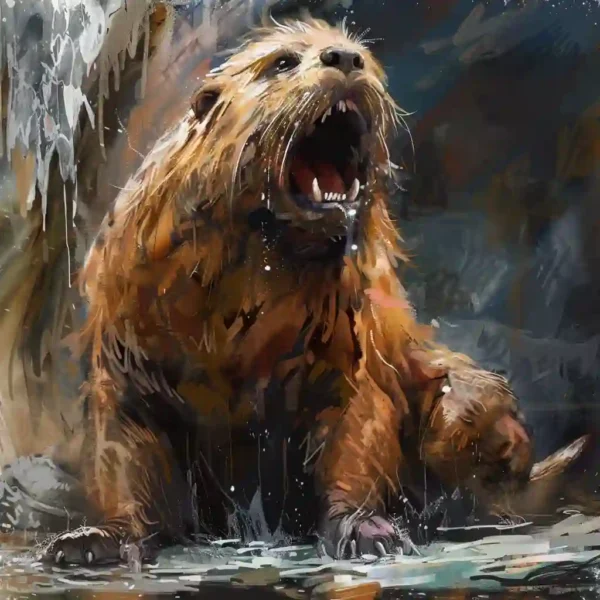
The name literally translates from Irish as “Water-hound,” though it is more commonly known as the King Otter. Unlike the playful river otters we see today, the Dobhar-chú is a formidable, prehistoric-looking predator. It is a creature of unrelenting vengeance and territorial aggression, a physical manifestation of the dark, cold depths of the Irish interior.
According to legend, if you kill a Dobhar-chú, its mate will rise from the water and pursue you across any distance, never stopping until your life is taken in return. Its most famous act is recorded on a 17th-century tombstone in Conwall Cemetery, Glenade, which marks the grave of a woman supposedly killed by the beast.
Origin & History
The Dobhar-chú is a staple of Irish cryptozoology and folklore, with sightings and stories concentrated in the western counties of Leitrim, Mayo, and Galway.
The Legend of Grace Connolly: In 1722, a woman named Grace (or Gráinne) Connolly was allegedly attacked and killed by a Dobhar-chú while washing clothes at Glenade Lough. Her husband found her body and tracked the beast, eventually killing it. However, as the creature died, it let out a high-pitched whistle that summoned its mate, leading to a desperate horse chase where the husband eventually triumphed.
The Sligo Tombstone: To this day, a headstone in Leitrim depicts the image of the Dobhar-chú—a creature that looks like a hybrid of a dog and a fish—standing over its victim, serving as historical "evidence" of the encounter.
The Guardian of the Lough: It is often described as the "King" of all otters, and other water animals are said to flee whenever the Dobhar-chú enters a stretch of water.
Powers & Abilities
- The Death-Whistle: When in danger or dying, the Dobhar-chú emits a piercing, supernatural whistle. This sound acts as a beacon, alerting its mate (who is always nearby) to the exact location of its assailant.
- Amphibious Stamina: Unlike common otters, the Dobhar-chú can run on land for miles without tiring, keeping pace with a galloping horse to hunt down those who have offended it.
- Crushing Jaw Pressure: Its teeth are designed to snap through the spines of large fish and the bones of livestock (or humans) with a single, devastating bite.
Appearance
- Size: The Dobhar-chú is generally described as being large and powerful, with some accounts suggesting that it is about the size of a dog or larger.
- Body: It has a body that resembles both a dog and an otter, with a sleek and streamlined appearance.
- Head: The creature is said to have a dog-like head, often with sharp teeth. Some accounts describe it as having a more elongated snout similar to an otter.
- Coat: The Dobhar-chú is often depicted as having a waterproof fur coat, which is a characteristic shared with otters.
- Tail: The tail may be long and muscular, contributing to the creature's ability to navigate through water with ease.
- Coloration: The color of the Dobhar-chú's fur can vary in different accounts, but it is often described as dark or black.