
★ Overview
UBUME
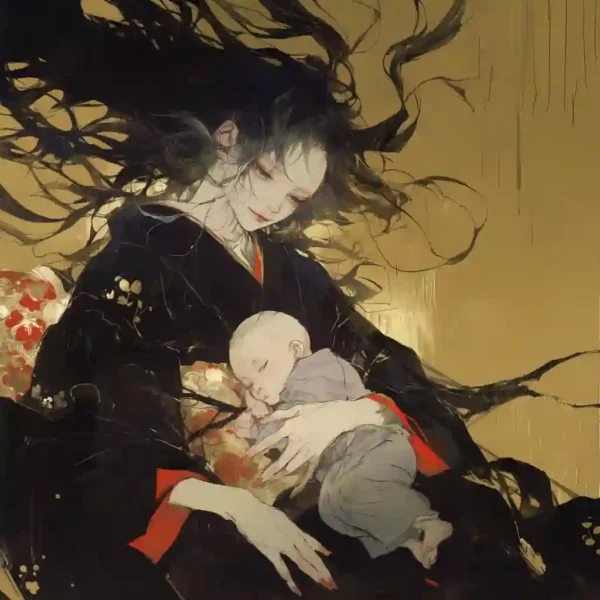
The Ubume is a mythical creature from Japanese folklore, and its name translates to “pregnant woman” or “childbearing woman.” The Ubume is often associated with ghostly and supernatural elements, particularly related to maternal themes. This creature is not a malicious spirit but rather a tragic figure tied to the themes of motherhood, childbirth, and compassion. The Ubume is often depicted as the ghost of a woman who died during childbirth or shortly after giving birth. In some stories, it is described as a disheveled and ghostly figure, still carrying a baby or showing signs of recent childbirth.
In some cases, if the child survived the mother’s death, the Ubume will return to the world of the living to buy food or sweets for the baby using coins that later turn into dried leaves.
Origin & History
During periods in history when maternal mortality rates were higher, especially in the absence of modern medical practices, the loss of mothers during childbirth was a poignant and common occurrence. The Ubume legend may have developed as a way to express and cope with the grief associated with the deaths of women during this vulnerable period of their lives.Stories of the Ubume often emphasize the spirit's sorrow and its continued maternal instincts, as seen in its concern for the welfare of the child it leaves behind.
The "Grave-Birth" Legend
Many Ubume stories involve a "living" baby being discovered in a grave. People might notice a strange woman buying food every night with odd coins. When they follow her, she leads them to a fresh grave and disappears. Upon digging, they find a healthy, crying infant inside the coffin with its deceased mother—the Ubume’s spirit had been caring for it from the afterlife.
Powers & Abilities
- Acceptance: If her child is found and cared for by the living, or if a traveler successfully holds her "stone baby" until she vanishes, her spirit is often able to find peace and move on.
- Proper Burial: In ancient Japan, specific rituals (like placing a doll in the coffin or performing a C-section on a deceased pregnant woman) were used to prevent the spirit from becoming an Ubume.
- Clothing/Offerings: In some folk traditions, throwing a piece of clothing (like a headscarf or waistcloth) at an Ubume can distract her long enough for a person to escape her "heavy" test.
Appearance
- The Mother: She typically appears as a woman wearing a white burial robe, with long, disheveled hair and a pale, sorrowful face.
- The "Bloodied" Variant: One of the most famous (and graphic) depictions shows her naked from the waist down and covered in blood, reflecting the tragedy of her death.
- The Bird Variant: In some regions, she is conflated with the Kokakuchō (a bird-like yokai). This version has wings and feathers and is said to snatch children or carry a "spirit stone" that resembles a baby.