
★ Overview
FUATH
In the folklore of the Scottish Highlands, “Fuath” (pronounced foo-ah) is both a specific creature and a general Gaelic term meaning “hate” or “aversion.” It serves as a broad classification for a variety of malevolent water spirits that haunt the rivers, lochs, and coastal inlets of Scotland.
Unlike the helpful Brownie or the occasionally neutral Kelpie, the Fuath is almost purely malicious. To see a Fuath is an omen of disaster, and to touch one is often fatal. They are known for their extreme territoriality—they do not want to help or even interact with humans; they simply want them gone from their watery domains.
Origin & History
Like many folklore tales, the exact origin of the Fuath is challenging to pinpoint, as these stories were transmitted orally over generations before being recorded in written form.
The Fuath represents the treachery of the Highlands' waters. To the ancient Scots, a river that looked calm but had a deadly undertow wasn't just "water"—it was a "hateful spirit" (a Fuath) trying to claim a life.
"Fuath" is an umbrella term. If you dig deeper, you’ll find specific types of Fuath:
-
The Beathach Mòr: A "Great Beast" version that haunts specific sea lochs.
-
The Uruisg: A half-man, half-goat water spirit (similar to a satyr) that is often lonely and seeks human company, though its appearance usually scares people away.
-
The Shellycoat: A prankster Fuath that wears a coat of rattling seashells and leads travelers astray by mimicking cries for help from the water.
Powers & Abilities
- Drowning Grip: They possess unnatural strength in their webbed hands, specifically designed to pin a victim to the bottom of a river until they stop struggling.
- Atmospheric Control: The Fuath can summon sudden mists and localized storms to disorient travelers near the water’s edge.
- Shape-Shifting: While they prefer their shaggy, monstrous form, they can briefly appear as beautiful women (often called Glaistigs) or animals to lure people toward the water.
- Freezing Touch: Because they embody the cold of the northern waters, their touch is said to be so cold it can paralyze human limbs instantly.
Appearance
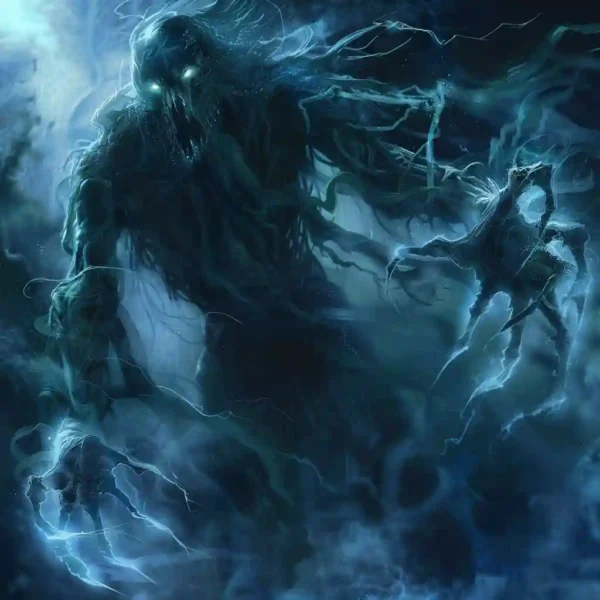
- The Shaggy Hide: They are almost always described as being covered in thick, matted fur, usually yellow or seaweed-green in color, which drips with freezing water.
- The Webbed Extremities: Their hands and feet are webbed like a duck or frog, tipped with sharp, black claws for gripping slippery rocks or dragging prey beneath the surface.
- The Luminous Eyes: They possess large, pale eyes that glow with an unsettling light, allowing them to see in the silt-heavy darkness of a loch bed.
- The Tail: Most accounts describe them as having a long, thick tail similar to that of a fish or a seal, which they use for rapid propulsion.
- The Lack of a Nose: A common and chilling detail in Highland lore is that the Fuath has no nose, giving its face a flat, skull-like appearance.
- Green Attire: In instances where they take a more humanoid form, they are often seen wearing green dresses or robes, blending into the reeds and algae.