
★ Overview
BRAHMARAKSHASA
In Hindu mythology, a Brahmarakshasa (also spelled as Brahma Rakshasa or Brahma Rakshas) is a supernatural creature or spirit with origins in ancient Indian folklore. The term “Brahmarakshasa” is a combination of two words: “Brahma,” referring to the Hindu god of creation, and “Rakshasa,” which generally denotes a malevolent being or demon.
A Brahmarakshasa is believed to be the soul of a Brahmin (a member of the priestly caste in Hinduism) who, due to certain deeds or actions in their lifetime, is cursed to roam the earth as a fierce spirit, he remains trapped between worlds because his intellectual pride prevents him from achieving liberation (moksha). Unlike an ordinary Rakshasa (demon), a Brahmarakshasa retains all his scholarly brilliance, making him a cunning, sophisticated predator who can recite the Vedas even as he stalks his prey.Brahmarakshasas are often depicted as vengeful and malevolent entities, driven by anger, resentment, or unfulfilled desires from their past lives.
Origin & History
Brahmarakshasas are often depicted as cursed souls or spirits of deceased Brahmins (members of the priestly caste) who, due to certain transgressions or unresolved issues in their lifetimes, are condemned to roam the earth in a monstrous form. They are typically associated with forests, graveyards, and other desolate places, where they are believed to prey upon unsuspecting victims.
While Brahmarakshasas are primarily known for their malevolent nature, some stories and myths also explore themes of redemption and the potential for these beings to find peace or liberation from their cursed existence through acts of penance or divine intervention.
Powers & Abilities
- Mastery of Sacred Texts: He retains total recall of the Vedas and Puranas. He can use sacred mantras for malevolent purposes, making his "sorcery" far more potent than that of a standard ghost.
- Supernatural Strength: He possesses the raw, devastating power of a Rakshasa, capable of tearing down structures or overpowering entire groups of people.
- Flight and Shapeshifting: Like other high-level demons, he can fly through the night and assume various forms to trick his victims.
- The Boon-Giver: Paradoxically, if a Brahmarakshasa is pleased (usually by someone showing extreme intellectual respect or passing a test of wits), he has the power to grant enormous wealth, gold, or divine boons.
- Mimicry: He often enjoys "disturbing" scholars by repeating their verses back to them or mimicking their voices to lead them astray.
Appearance
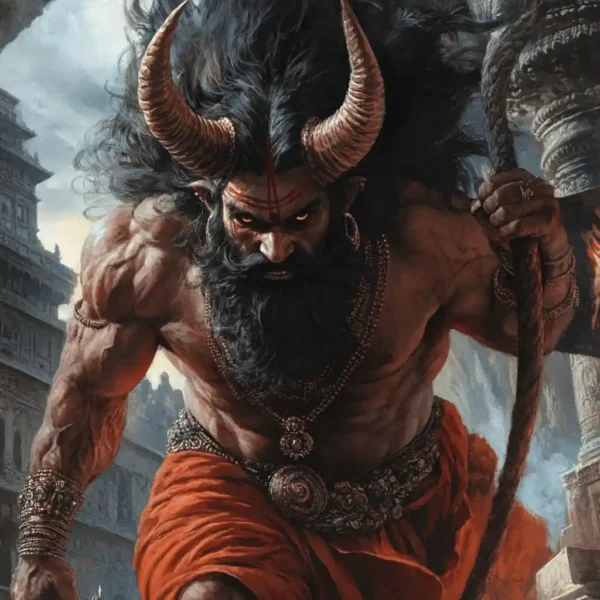
- The Monstrous Scholar: He is often depicted as a massive, hulking figure with the fierce traits of a demon—such as two horns on his head and sharp, curved fangs—yet he retains the traditional marks of a Brahmin.
- The Tuft and Thread: He usually has a shikha (a long lock of hair or tuft) on the top of his head and may still be wearing a tattered sacred thread (upavita) across his chest.
- The Bat-Like Stance: In many folk tales, he is found hanging upside down from the branches of ancient trees (specifically the Peepal or Banyan tree), waiting for travelers to pass beneath him.
- The Wizened Limbs: His body is often described as having dried-up, skeletal limbs and a terrible, wide mouth designed for consuming human flesh and blood.
- The Iconographic Colors: In traditional temple art, he is often portrayed with yellow or white skin to signify his priestly origin, though he radiates a terrifying, malevolent energy.