
★ Overview
Why Fairies Have Fascinated Humans for Centuries
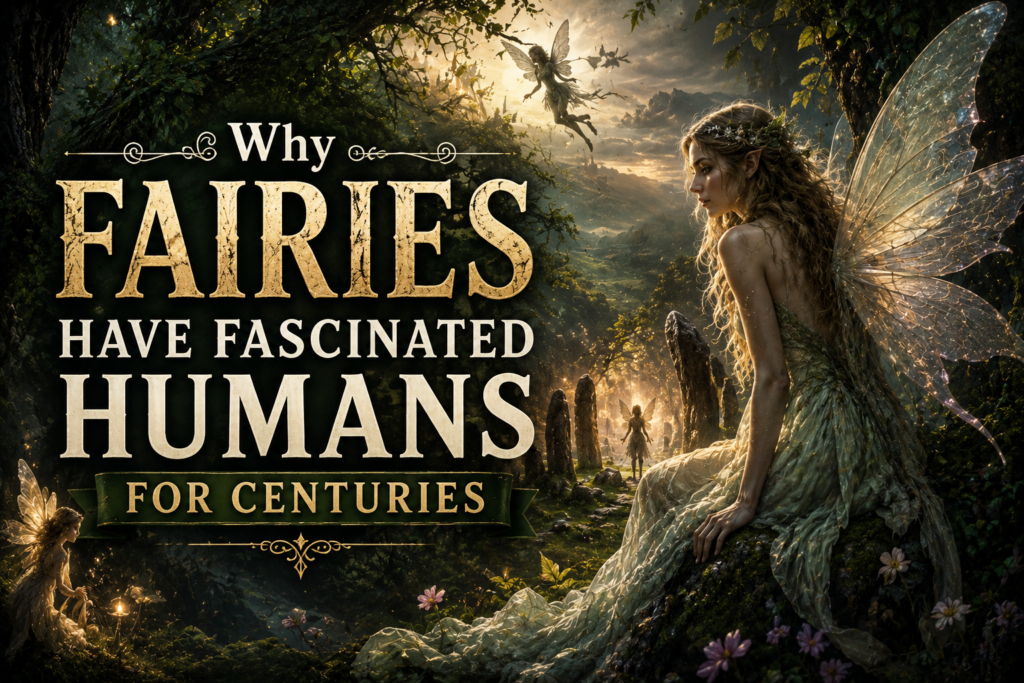
Fairies feel gentle at first glance. Sparkling wings, tiny bodies, and a sprinkle of magic dust seem harmless enough.
But the real folklore tells a very different story. Ancient fairies were not always kind, and they were rarely small.
They were powerful, unpredictable beings who could bless a household or curse it entirely, all depending on a single act of etiquette. This article explores where that fascination truly comes from, and why it refuses to fade even today.
What Is a Fairy, Really?
The word fairy covers a huge range of magical beings across European folklore. It comes from the Old French term faerie, meaning enchantment.
According to our own Fairy, fairies are often described as a hidden race, sometimes tied to the Tuatha De Danann, the legendary People of the Goddess Danu in Irish mythology.
Here are a few core facts that separate real folklore from popular imagination.
- Fairies are frequently described as human sized, not tiny
- Many are described as breathtakingly beautiful, almost unnaturally so
- They are said to live in a parallel dimension called the Otherworld
- This realm is only reachable through certain thin places, such as stone circles or fairy rings
This alone explains part of the fascination. Fairies are not simple fantasy creatures. They are a genuinely old and complex belief system.
Why Fairies Have Captivated Humans for So Long
Fairies have survived in folklore for centuries because they tap into something deeply human. A few reasons stand out clearly.
1. They Explain the Unexplainable
Long before science offered answers, fairies filled in the gaps. A sudden illness, a lost object, or a strange light in the woods could all be blamed on fairy activity.
2. They Blur the Line Between Good and Evil
Unlike many mythological monsters, fairies are not simply villains. They can reward kindness generously, yet punish rudeness severely. This unpredictability makes them far more compelling than a straightforward monster ever could be.
3. They Reward Human Curiosity
Stories of fairy rings, hidden realms, and secret bargains invite listeners to wonder what lies just beyond the edge of the forest. That mystery has never really gone out of style.
The Strange Moral Code of Fairies
One of the most fascinating parts of fairy folklore is how differently they think compared to humans.
Fairies are not concerned with good or evil the way people are. Instead, according to traditional lore, they operate around three core principles.
- Etiquette. Manners and proper conduct matter immensely to them.
- Balance. Every gift or favor tends to require something in return.
- Debt. Owning a fairy anything can carry serious, lasting consequences.
This explains many strange old customs. Leaving out a bowl of milk was not superstition for its own sake. It was payment, meant to keep a fairy’s favor rather than risk its anger.
The Powers Behind the Legend
Fairies are not just pretty figures fluttering through gardens. Folklore credits them with genuinely unsettling abilities.
- The Glamour. A powerful illusion magic capable of making dead leaves look like gold, or transforming an old hag into a beautiful princess.
- Time Dilation. Time inside the Fairy Realm does not match our own. A single night of dancing in a fairy ring could mean a hundred years passing in the human world.
- The Geas. A binding magical command or taboo placed on a person. Breaking it was said to lead to misfortune or even death.
- Elemental Command. Some fairies were believed capable of controlling weather, healing incurable illness, or withering crops with a single glance.
These are not small parlor tricks. They represent real, tangible power over human life, which is exactly why older generations took fairy belief so seriously.
What Fairies Actually Looked Like in Old Folklore
Modern pop culture loves tiny, winged fairies with glitter trailing behind them. Older folklore paints a very different picture.
According to traditional accounts, fairies were often described using a few consistent details.
- An almost uncanny, glowing perfection to their skin
- Unnaturally graceful movement
- Subtle physical tells, such as pointed ears or a missing philtrum
- Clothing that appeared to be woven from cobwebs, moonlight, or flower petals
- The ability to shift in height, from as tall as a willow tree to as small as a blade of grass
Interestingly, wings were rarely part of the earliest tales. Older folklore usually describes fairies moving by riding the wind or teleporting instead. The now iconic gossamer wings were largely a Victorian addition, designed to make fairies feel softer and less threatening to audiences of that era.
Fairies Were Not Always Alone
Fairy folklore rarely exists in isolation. It connects closely to a wider cast of magical beings across European tradition.
The mischievous pixie, for example, shares many traits with fairies but carries its own distinct personality. As explained on our Pixie, pixies are known for leading travelers in circles and hiding household items, all while remaining smaller and more chaotic than their fairy cousins.
Other closely related beings worth exploring include the following.
- Elves, often considered more solemn and dignified members of the fae world
- Brownies, helpful spirits tied to households and domestic chores
These connections show that fairy lore was never a single, isolated myth. It was part of a much larger, interconnected belief system across the British Isles and beyond.
Why the Fascination Still Exists Today
Even now, fairies remain deeply embedded in culture. A few reasons this fascination has never faded include the following.
- Fairy tales continue to shape childhood storytelling across the world
- Fantasy literature and film regularly reimagine fairy courts and realms
- Folklore tourism, including sites like ancient Irish fairy forts, still draws curious visitors
- Modern spirituality and neopagan practices keep older fairy beliefs alive
The image may have softened over the centuries, but the core appeal has not changed. People are still drawn to the idea of a hidden world running parallel to our own, governed by rules we barely understand.
Frequently Asked Questions
Were fairies always considered dangerous?
Not exactly evil, but certainly unpredictable. Traditional folklore describes fairies as neither purely good nor purely bad. Their reactions depended heavily on respect, manners, and unspoken rules of etiquette.
Did fairies always have wings?
No. Wings are largely a modern addition. Older folklore usually describes fairies traveling by riding the wind or teleporting rather than flying with wings.
What is the difference between a fairy and a pixie?
While closely related, pixies are generally described as smaller, more mischievous, and more chaotic than fairies, who are often depicted as taller, more elegant, and more powerful.
Why did people leave out milk or food for fairies?
This was a traditional offering meant to maintain balance and stay on a fairy’s good side, since fairies were believed to value etiquette and reciprocity very highly.
Where does the word fairy come from?
The word traces back to the Old French term faerie, meaning enchantment, which later evolved into the fairy folklore we recognize today.
A Trusted Source for Fairy Folklore
At Mythical Creatures, every article is built on established folklore traditions and historical research, so readers get an accurate picture behind the magic.