
★ Overview
12 Beautiful Mythical Creatures that are Deadly—and Exactly How They Kill
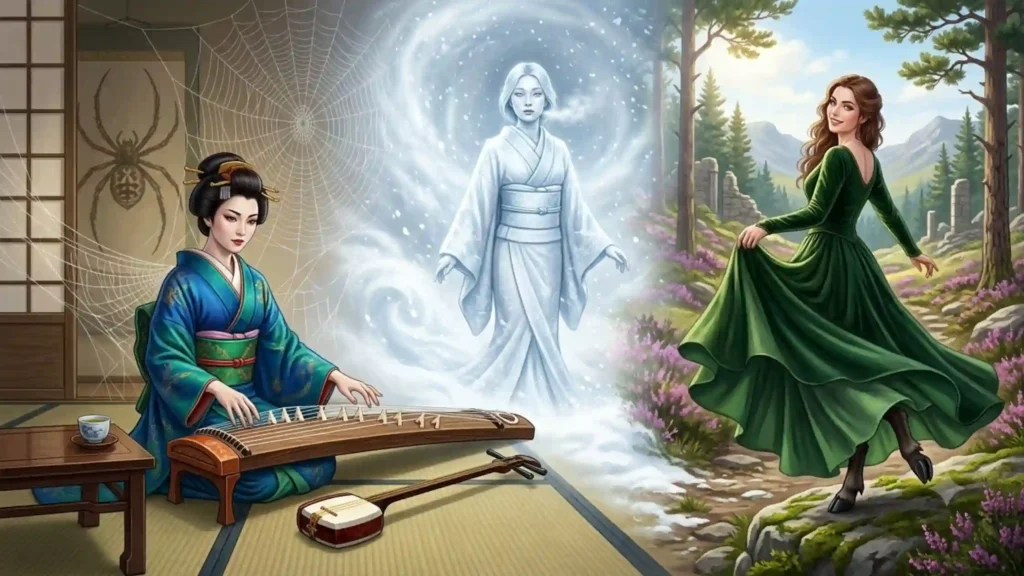
The most beautiful mythical creatures are not always the safest to approach. In many traditions, beauty is not merely something a dangerous being happens to possess: it is the bait that persuades a traveller to step closer, follow a voice, accept an invitation or ignore the one detail that gives the monster away.
This is not a list of innocent creatures burdened with invented “dark sides.” Every being below earns its place through a tradition in which an attractive form, enchanting voice or seductive disguise helps it attack human victims. The details vary between storytellers and regions, but the danger is never just metaphorical.
12. Hone-onna: the lover whose embrace drains life
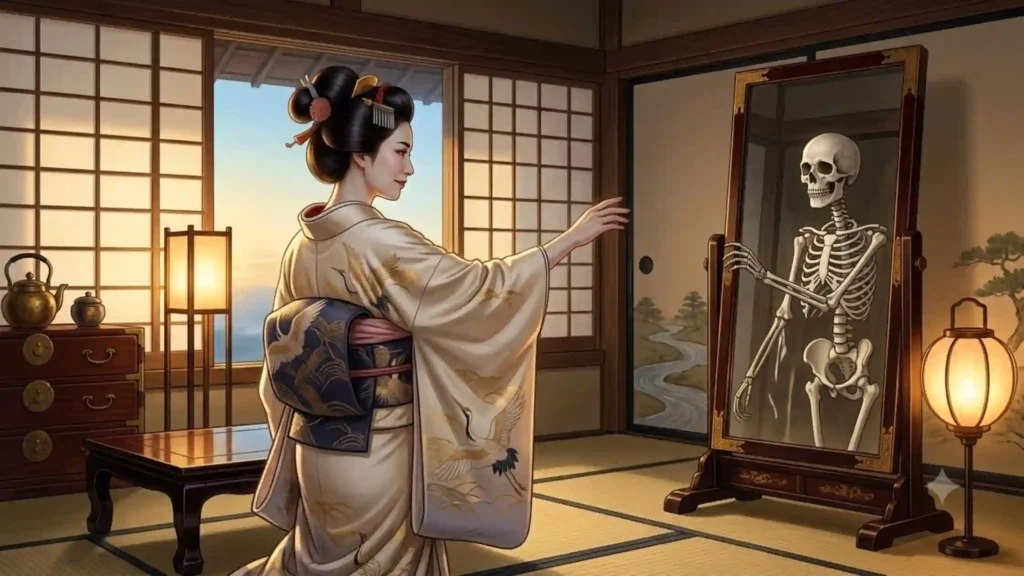
The Hone-onna of Japanese folklore appears to her former lover as the beautiful woman he remembers. To everyone else, signs of the truth may be visible: she is a skeleton, corpse or ghost concealed beneath the appearance of living beauty.
Her danger is intimacy. The man welcomes her back night after night, unaware that each visit drains more of his vitality. He grows weaker while his supernatural lover continues to return. In versions where protective charms finally reveal or repel her, the horror is not a sudden attack but the realization that affection itself has become the feeding mechanism.
The lure: the face of a lost or desired lover.
The fate: repeated embraces consume the victim’s life until he wastes away.
11. Iara: the river singer who leaves no return journey
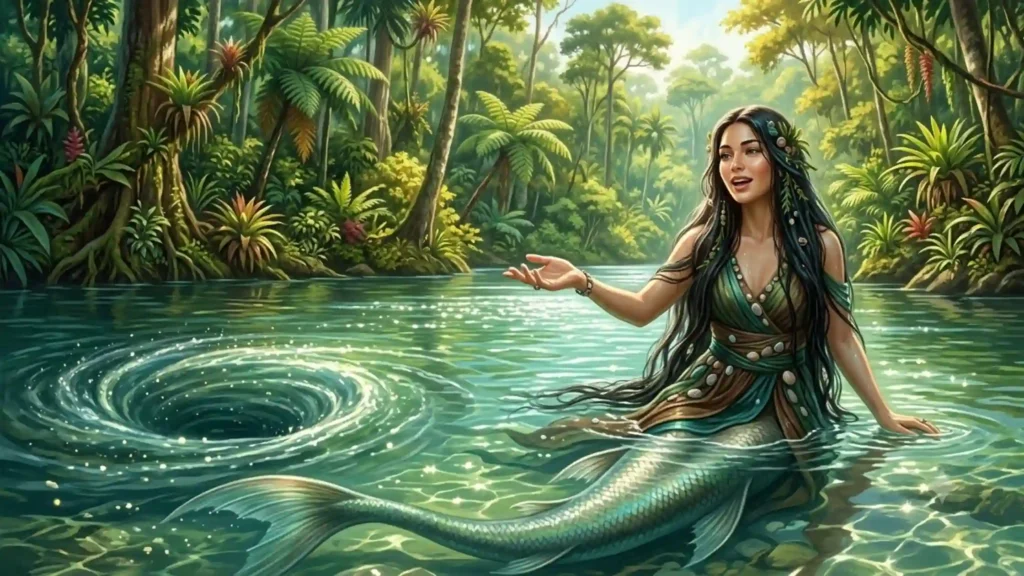
In Brazilian folklore, Iara is associated with the Amazon’s rivers and is commonly described as a beautiful woman—or mermaid-like water being—with an irresistible voice. A man hears her singing from the riverbank, sees her in the water and abandons caution to follow.
The killing method is brutally simple beneath the enchantment. The victim enters the river and is pulled below the surface. Some retellings allow for survival or an altered life underwater, but the threatening tradition treats Iara’s song as the last invitation a traveller accepts.
The lure: supernatural beauty and a song carrying across the water.
The fate: the enchanted listener follows her into the river and drowns.
10. Baobhan sìth: the dancer who drinks the hunters
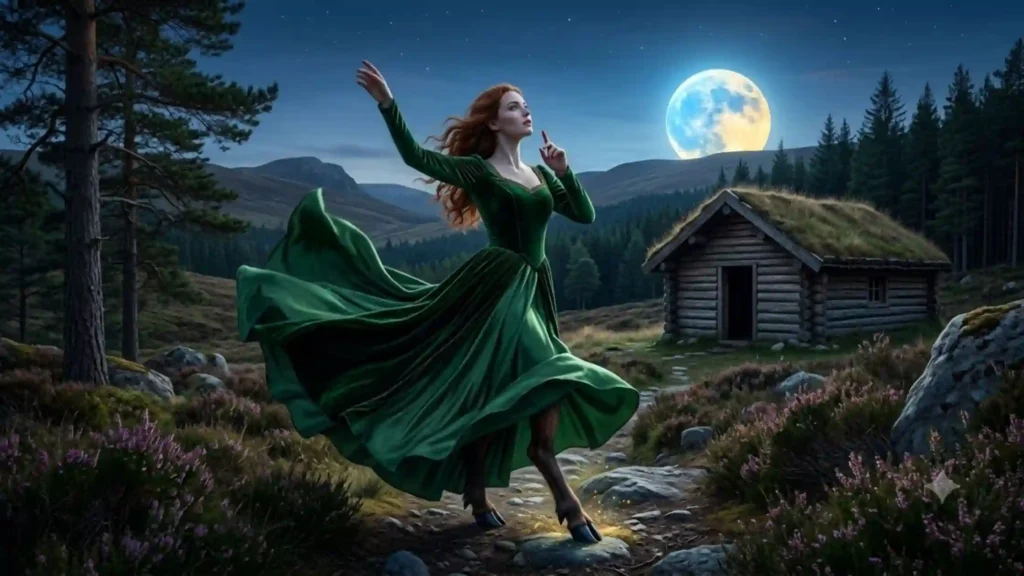
The baobhan sìth of the Scottish Highlands is not a vague “dangerous fairy.” In a well-known story pattern, hunters shelter for the night and wish for female company. Beautiful women in long green dresses arrive and begin to dance with them.
The dresses hide an identifying detail often supplied by later tellings: deer-like hooves instead of human feet. Once the men are isolated and exhausted, the dance becomes an attack. The baobhan sìth pierce or cut their victims and drain their blood. A survivor may escape because iron—sometimes the iron shoes of a horse—keeps the attackers away.
The lure: beautiful strangers answering a lonely hunter’s wish.
The fate: the dancers open their victims’ bodies and drink their blood.
9. Patasola: the jungle beauty with one fatal step

The Patasola belongs to Colombian folklore and is said to haunt forests, mountains and isolated paths. She appears to a lone hunter, woodcutter or traveller as an attractive woman, sometimes imitating someone he already longs to see. She draws him away from his companions and deeper into the wilderness.
Only when escape is difficult does the disguise collapse. The beauty becomes a one-legged, fanged and predatory figure. Depending on the telling, she tears the victim apart, devours his flesh or drinks his blood. Here beauty is camouflage used by the danger of the forest itself.
The lure: a beautiful woman—or familiar beloved—alone in the jungle.
The fate: she reveals her monstrous form and mauls, devours or drains the victim.
8. Gumiho: the perfect stranger who wants your liver
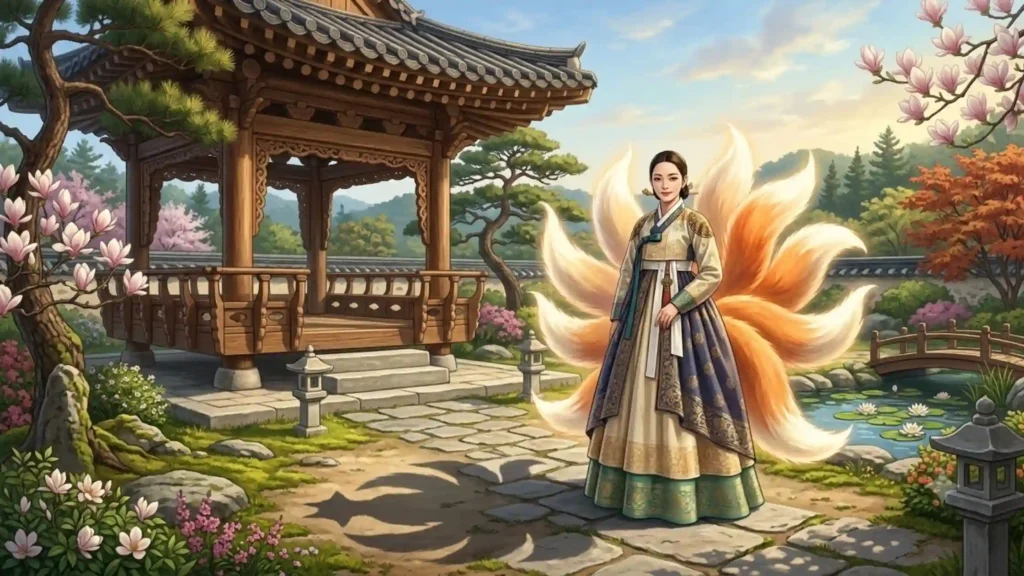
The gumiho is a nine-tailed fox from Korean tradition. Modern stories often make the figure sympathetic, but older and darker tales describe a fox that transforms into a beautiful woman to move among humans and prey upon them.
The glamour allows the gumiho to become a lover, bride or apparently vulnerable stranger. After gaining privacy and trust, it returns to predatory purpose. Different tales identify different organs, but the victim’s liver or heart is a frequent prize. Some stories make long-term humanity possible if the fox can obey difficult conditions; the person who discovers the deception too soon may not live to explain it.
The lure: an exceptionally beautiful human disguise sustained by intimacy.
The fate: the fox kills the victim and consumes the liver, heart or other vital organs.
7. Empousa: the shapeshifter who feeds after seduction
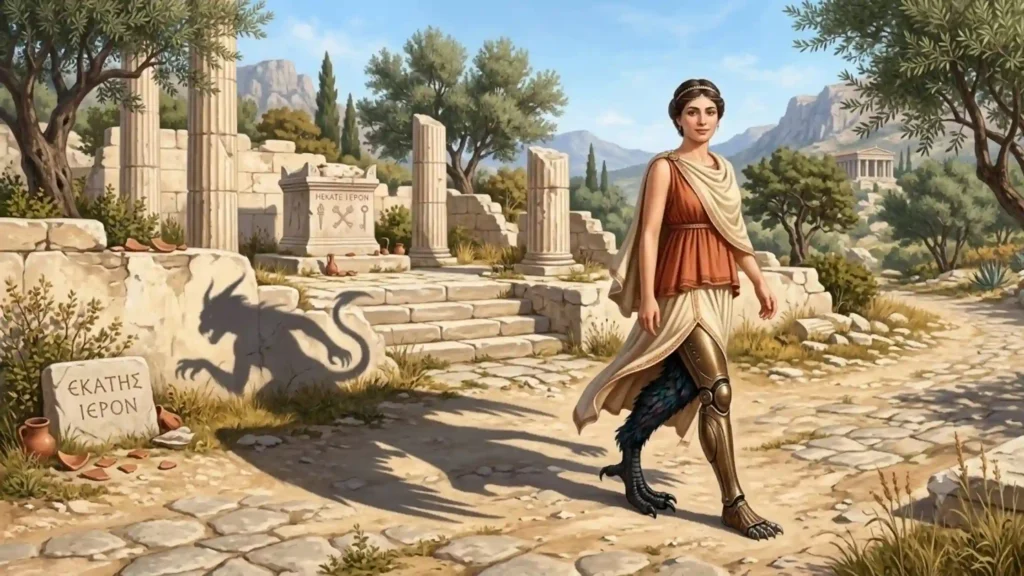
Empousa appears in ancient Greek literature and later folklore as a frightening female apparition associated with Hecate. Descriptions vary, including mismatched or unnatural legs, but transformation lets her conceal the warning signs beneath the form of a beautiful young woman.
The attractive appearance draws young men into an encounter they believe they understand. Once the victim is isolated, the predator feeds. Later traditions describe Empousai as consuming flesh or drinking blood after seducing their targets. The disguise is not decoration; it is what brings prey within reach.
The lure: shapeshifting into a desirable young woman.
The fate: the victim is attacked and his blood or flesh is consumed.
6. Rusalka: the laughing swimmer who pulls you under

The rusalka varies enormously across Slavic regions and historical periods, so she should not be reduced to one universal biography. In the dangerous water-spirit tradition, however, she appears as a beautiful young woman near a river, lake or millpond. Her singing, laughter or dancing attracts young men toward the bank.
Once a victim is close enough, the encounter becomes physical. Rusalki may drag him into the water, tangle him, drown him or—in some accounts—tickle him until he can no longer breathe. The prettiness of the scene is part of its camouflage: moonlight, music and a bathing figure conceal a death by water.
The lure: singing, laughter and the sight of a beautiful woman beside the water.
The fate: the victim is seized and drowned, sometimes after being tickled to death.
5. Pontianak: perfume before the killing
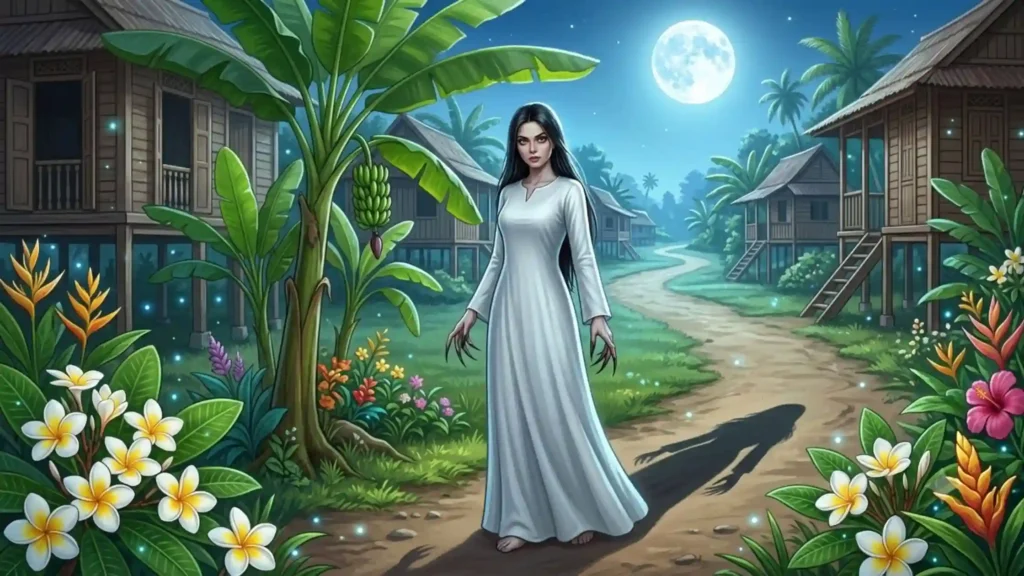
The Pontianak, or Kuntilanak in related Indonesian traditions, is a female revenant known across Malay and Southeast Asian folklore. She is often connected with death during pregnancy or childbirth. From a distance she can appear as a beautiful woman in white; the fragrance of flowers may announce her before more corrupt smells reveal that something is wrong.
Stories differ sharply by region, but the encounter is rarely safe. A man who approaches the apparently beautiful stranger may see her transform into a corpse-like predator. She attacks with long nails or claws, drinks blood, tears into the body or devours the victim. Some traditions give her a particular hostility toward men.
The lure: a beautiful solitary woman, white clothing and floral perfume.
The fate: she reveals her revenant form, claws the victim open and feeds on blood or flesh.
4. Yuki-onna: the face in the blizzard

The Yuki-onna is already familiar to many readers, but she belongs here because her method is unusually precise. She appears during snowstorms as a striking woman with pale skin, dark hair and clothing that seems to merge with the snow. A freezing traveller may mistake her for another lost person—or become transfixed when he should be seeking shelter.
In lethal versions, she breathes cold onto the victim until he freezes, kisses away his life force or simply ensures that he falls asleep in the storm and never wakes. Some celebrated stories give her compassion, marriage and emotional complexity; those versions should not be erased. Her beauty and her deadly cold can coexist without pretending she is evil in every tale.
The lure: a calm, beautiful figure appearing impossibly untouched by the storm.
The fate: her breath, kiss or presence freezes the traveller or drains his life.
3. Jorōgumo: music, silk and the spider behind the screen
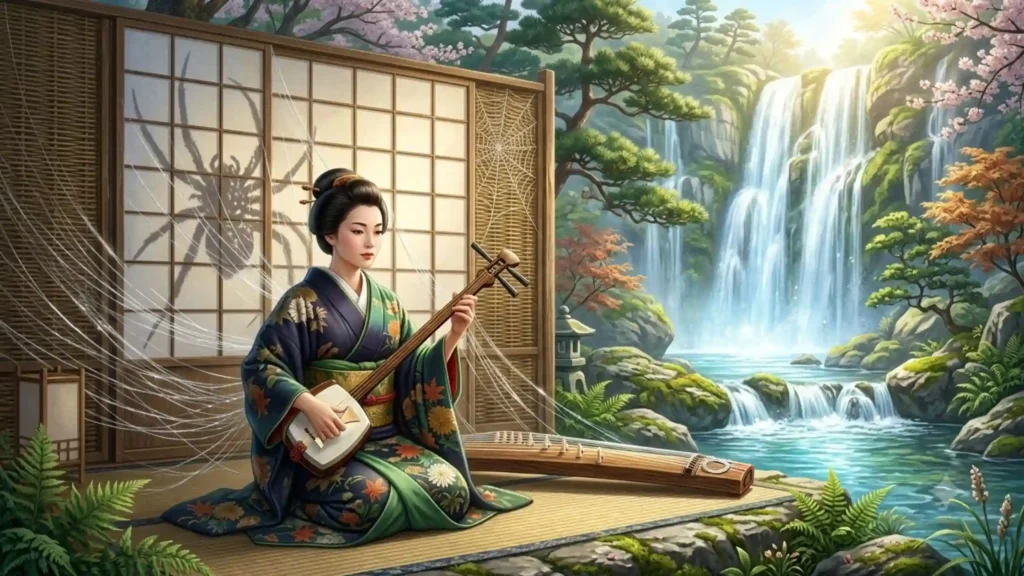
The Jorōgumo is a Japanese spider yōkai capable of taking the form of a beautiful woman. Tales place her in secluded houses, caves or near waterfalls, where beauty and music make the setting feel inviting rather than predatory.
The illusion gives her time to position the victim. While he listens to her instrument or accepts her attention, threads gather around him. Once restrained, he cannot fight the enormous spider beneath the human form. Some stories end with the victim pulled into water; others end in the lair, where he is weakened and eaten.
The lure: a beautiful musician or hostess in an isolated place.
The fate: she binds the victim in spider silk and drowns or devours him.
2. Lamia: the beautiful stranger who hunts children
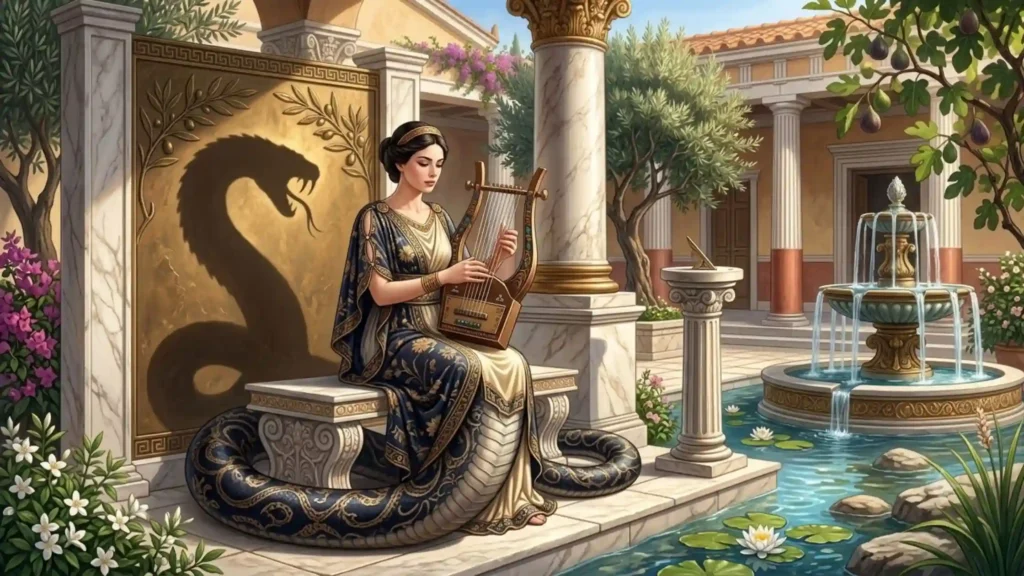
Lamia changed considerably between ancient sources and later European imagination. In Greek and Roman traditions she becomes associated with grief, the killing of children and a monstrous appetite. Later literature increasingly presents a serpent-bodied woman who can conceal her nature beneath extraordinary beauty.
That later beautiful disguise is what qualifies her for this list, but it should not be carelessly projected backward onto every ancient account. In the seductive tradition, Lamia attracts a young man and isolates him while hiding what she is. Other versions focus on children rather than lovers: she steals them and consumes them. Either way, the attractive surface prevents the victim or household from recognizing a predator.
The lure: a beautiful human form concealing a monstrous or serpentine identity.
The fate: she consumes the seduced victim or preys upon children.
1. Siren: the song that makes sailors wreck themselves
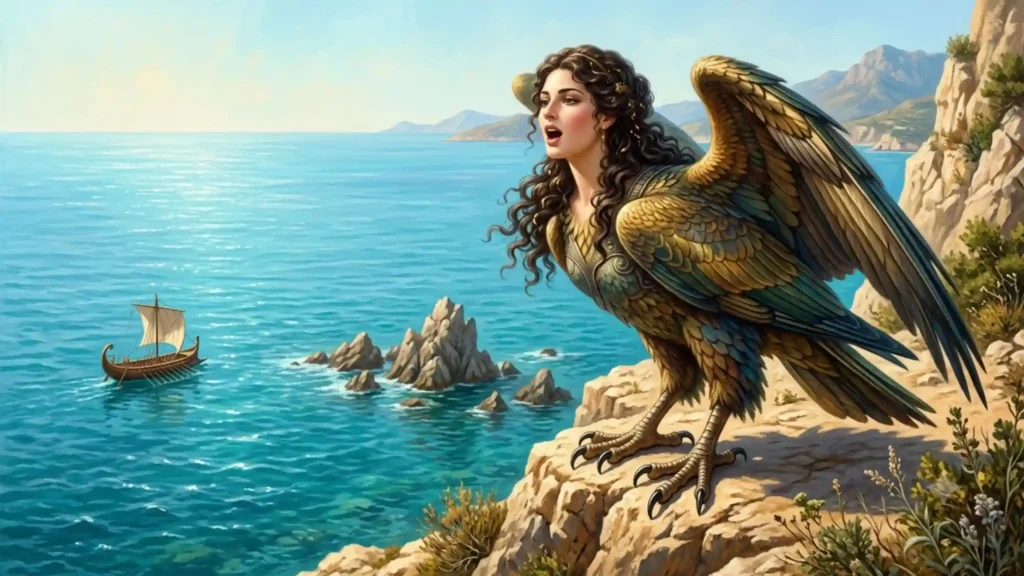
The Sirens take first place because their attack requires almost no physical force. In Homer’s Odyssey, their song promises knowledge. A sailor who hears it wants to approach so badly that reefs, currents and every warning cease to matter. The shore around them is marked by death.
Ancient Greek Sirens were commonly imagined as bird-bodied women, not the fish-tailed mermaids of later art. Their visual form changed, but the mechanism remained terrifyingly elegant: the victim participates in his own destruction. The Sirens do not need to chase a ship. They make the crew choose the rocks.
The lure: a voice promising irresistible beauty, understanding and revelation.
The fate: sailors steer toward the song, wreck on the coast and die.
What makes these creatures different?
These traditions do not claim that beauty is secretly immoral. They use beauty as a problem of perception. A lonely traveller sees what he hopes to find. A sailor hears what he most wants to know. A grieving lover welcomes back the person he cannot bear to lose.
That distinction matters. The qilin does not belong on this list because gentleness is not a trick it uses to injure the innocent. Neither do the Simurgh, phoenix or selkie. A creature should not be accused merely because a writer can invent a gloomy interpretation of its symbolism.
The beings that do belong here are more specific—and more unsettling. Their victims are not defeated by ugliness charging out of the dark. They are defeated in the moment they decide that something so beautiful must be safe.
Which of these creatures would fool you long enough to get close?